
NB-A002
Targeting DNA Repair Vulnerabilities in Cancer
NB-A002 is a potentially first-in-class small molecule designed to target cancers that resist today’s standard treatments.
Built for DNA damage response (DDR)–deficient, especially homologous recombination deficiency (HRD) tumors, it introduces a groundbreaking strategy to selectively eliminate cancer cells while sparing healthy tissue.
The Challenge — HRD-Positive Cancers Remain Difficult to Treat
Cancers with homologous recombination deficiency (HRD) often develop resistance to:
- PARP inhibitors
- Platinum-based chemotherapy
This leads to limited treatment options and poor patient outcomes.


The Approach — Synthetic Lethality
NB-A002 Targets ILF2 to Disrupt Cancer Cell Replication
NB-A002 is an orally active small molecule that:
- Binds to the ILF2 protein
- Disrupts DNA stability mechanisms
- Increases stress during cancer cell replication
This triggers transcription–replication conflicts, pushing already vulnerable cancer cells beyond repair.
Why It Matters — Selectivity by Design
Targeting Weaknesses Unique to Cancer Cells
Cancer cells with DDR and HRD defects:
- Cannot repair additional DNA damage
- Become highly sensitive to NB-A002
Preclinical models show:
- Selective tumor cell killing
- Minimal impact on normal cells with intact repair systems
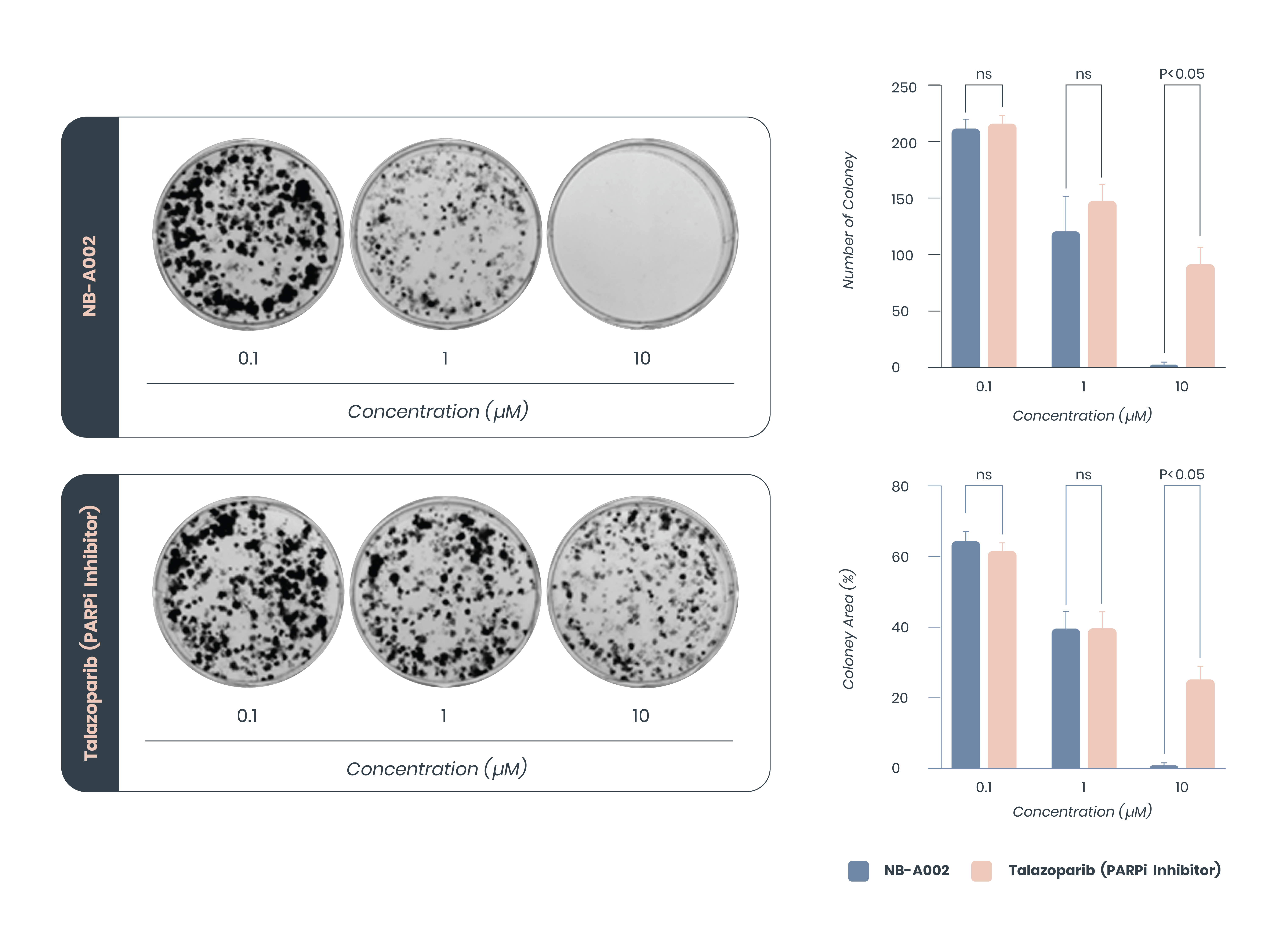
Left: representative plates after 7 days’ exposure. Right: quantified colony counts and colony area. Talazoparib (0.1–10µM), a potent PARPi inhibitor, showed no reduction in colony number; NB-A002 (0.1–10µM) reduced colonies in a concentration-dependent manner; n= biologic replicates
Progressing Toward the Patients
Pharmacokinetics
ADME profiling and drug metabolism studies

Toxicology
GLP-compliant safety assessments

Dosing Studies
NOAEL determination for clinical trials